

In due diligence, what’s scary isn’t bad data. It’s false confidence in bad data.
Teams often fear gaps or missing answers. But those are fixable (ask us how). What’s harder to fix is misplaced trust in data that looks credible but hasn’t been verified. It feels right, reads well, and quietly shapes major decisions.
Many of the world’s biggest financial frauds and poor investment calls have one thing in common: trust without verification.
Think about Enron’s fabricated earnings, companies that misled creditors with inflated assets, or fast-growing startups that scaled on self-reported metrics no one challenged until it was too late.
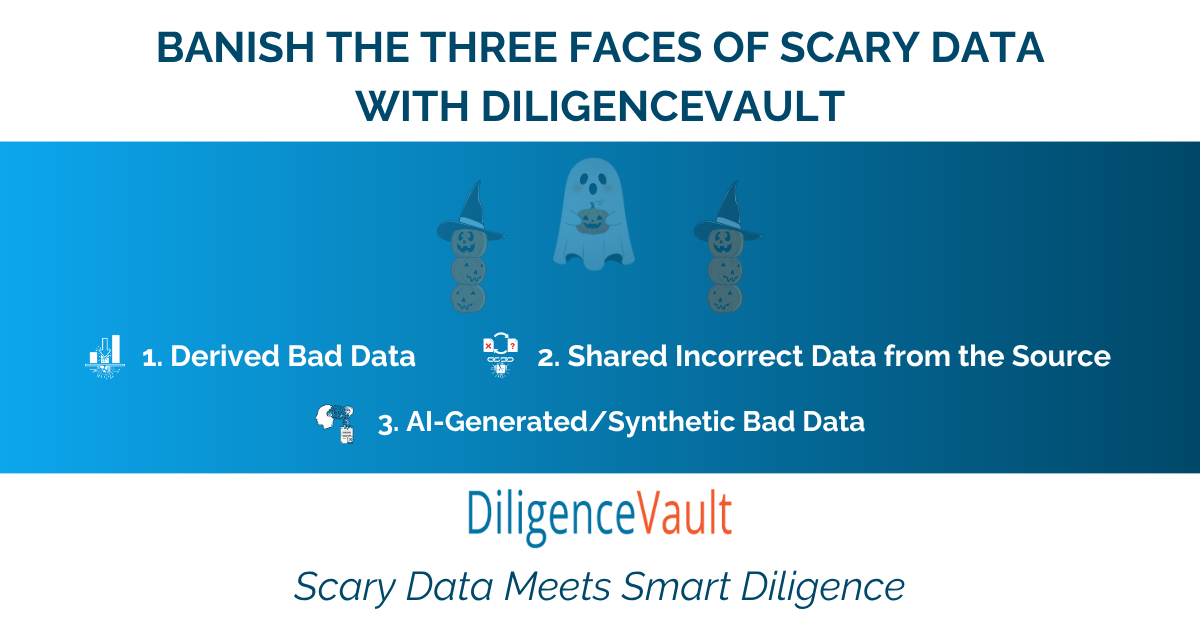
The same patterns show up in diligence today, just in subtler forms. Scary data typically falls into three categories:
1. Derived Bad Data
Data that starts right but becomes wrong through transformation, aggregation, or modeling.
- Valuations derived from outdated assumptions
- Benchmarks built on incomplete portfolio inputs
- Risk or exposure analytics that compound small errors into big distortions
It looks rigorous, but the foundation is fragile.
2. Shared Incorrect Data from the Source
When the origin itself is unreliable, sometimes intentionally, but often unintentionally.
- AUM time series shared by a manager but never verified by an administrator
- Fund performance data without reconciliation
- Self-reported education credentials that go unchecked
In these cases, the data doesn’t lie but the process does by failing to verify.
3. AI-Generated or Synthetic Bad Data
The newest and fastest-growing category.
- LLM-generated responses that sound credible but lack factual grounding
- AI summaries that present hallucinated numbers with confidence
- Fake documents or disclosures that blur the line between real and synthetic
The challenge isn’t visibility. It’s credibility.
Each of these creates a false sense of certainty. And certainty without verification turns data into danger.
“Trust, but verify” is not just good advice, it’s a diligence philosophy. Verification doesn’t slow decisions down; it strengthens them.
The real trick isn’t collecting more data. It’s knowing which data to trust.
The delight? A diligence process where intelligence and accountability go hand in hand.
That’s what we’re building at DiligenceVault a platform designed to turn scary data into trusted insight through structured workflows, verifiable data, and AI that’s transparent by design.